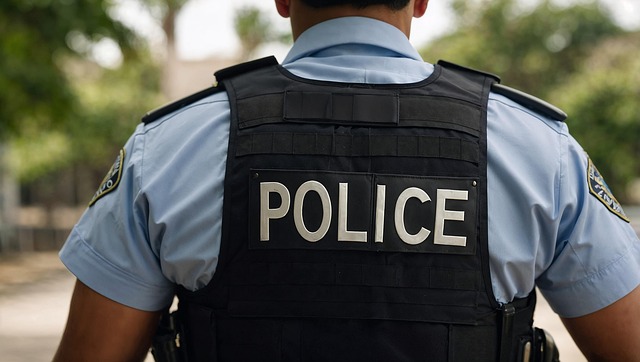


Police marketing is no longer optional for agencies that want to compete for qualified applicants and build public trust. Police marketing is about shaping perception with clarity, consistency, and proof, rather than letting rumors, headlines, and bad assumptions do it for you.
Most agencies still treat marketing like a poster, a video, or a one-time campaign. Real police marketing is a system that delivers the right message to the right people, repeatedly, across the channels they actually use.
Here are five strategies that deliver measurable results that can impact recruiting today.
1. Build a clear police marketing message
If your agency cannot explain who you are in one sentence, your police marketing will always be scattered. Start with a simple core message that includes three things: what you stand for, what you do, and why it matters. Then use that same message everywhere. For example, check out the Milwaukee Police Department, which meets each of these non-negotiables in police marketing.
This is where most departments lose people. They post one thing on Facebook, a different tone on Instagram, a different story to local media, and a totally different recruiting pitch on the website. The public experiences that as confusion. Candidates experience it as a lack of professionalism.
Police marketing works when the message feels consistent, no matter where someone finds you. Your website, social media bios, recruiting materials, press releases, and community presentations should all sound like they come from the same agency, with the same values and mission.
2. Make your website the conversion hub
A website is not a brochure. In police marketing, your website is the place where interest becomes action. That means the site needs to answer questions fast and remove friction.
For recruiting, make it simple to take the next step. Put the call to action at the top of the homepage and every recruiting page. Use plain language. List basic qualifications, pay, benefits, and timelines without making people hunt. Add a quick way to contact a recruiter and a short form that works perfectly on a phone.
The Asheville Police Department went from a few applicants in a year to dozens monthly by making this simple change.
To build community trust, your website should demonstrate competence and transparency. Publish clear policies, explain initiatives, and highlight outcomes. People do not need a wall of documents. They need an organized experience that makes them feel informed.
If your police marketing is strong on social media but weak on your website, you are losing applicants and you don’t even know it.
3. Use content that answers real questions
The easiest way to make police marketing effective is to publish content that matches what people are already searching for and asking. Think less about what you want to announce and more about what your audience wants to understand.
For candidates, that might include:
What is the hiring process like
How long does it take
What disqualifies someone
What does a typical day look like
What is field training really like
For the community, it might include:
How calls are prioritized
What happens after an officer-involved incident
What body camera policy says
How the department measures success
This kind of content builds trust by reducing uncertainty. It also improves SEO by aligning with search behavior. Police marketing that educates will outperform police marketing that only promotes.
A quick note on Search Engine Optimization (SEO). Flash and appearance on your police recruiting website may look good, but if no one sees them, they don’t do much good. Marketing agencies love to promote this and charge a lot of money, but keep it simple. Provide content that recruits want to know, and get your site linked on high-quality sites. The Philadelphia Police Department does an excellent job of this.
4. Show proof through people and outcomes
Stories matter, but they must feel real. In police marketing, proof beats hype every time. Let your officers, dispatchers, and professional staff speak in their own voice. Keep it simple and specific.
Instead of saying, “We are a great agency,” show:
Why an officer stayed
What mentorship looks like
How training is handled
What leadership expects
How the agency supports families
Also show outcomes. Share data when you can. Share response improvements, training investments, recruitment milestones, community program results, and other concrete indicators that your agency is serious and improving.
Police marketing becomes believable when it is anchored in evidence and everyday reality.
5. Create an automated system
Most police marketing fails because it assumes people will take action immediately. They will not (it’s generational). People need reminders, reassurance, and a clear next step.
For recruiting, that means a nurturing system. When someone clicks, fills out a form, or sends a message, they should receive a fast response and a simple sequence of follow-ups. Text and email matter here. So does a human touch at the right moment.
SAFEGUARD CONNECT NAMED TOP POLICE RECRUITING SOFTWARE BY LAW OFFICER MAGAZINE
For community engagement, the same principle applies. If someone attends a citizens academy, signs up for alerts, or engages with a post, you can guide them to the next step.
Police marketing is not just getting attention. It is keeping attention long enough to create action.
Final thought
The agencies that win in today’s environment are the ones that treat police marketing like a long-term discipline, not a short-term campaign. If you focus on a consistent message, a high-performing website, helpful content, real proof, and a follow-up system, you will build trust faster and recruit better people with less frustration.