

Thousands of law enforcement agencies across the country are running the same broken playbook. They post a job listing, host a career fair, and wait. And then they wonder why recruiting millennials in law enforcement feels like pushing a boulder uphill. The truth is, this generation did not stop wanting meaningful careers. They stopped trusting organizations that have not figured out how to communicate with them.
If your agency is struggling to fill academy seats or losing younger officers within the first three years, this article is for you.
Why Millennials Represent a Critical Recruitment Opportunity
Millennials, generally defined as those born between 1981 and 1996, now make up the largest share of the U.S. workforce. According to Pew Research Center, millennials account for roughly 35 percent of all American workers. Many of them are in their late 20s and early 30s, exactly the age range where law enforcement agencies want to be recruiting.
Yet agencies continue to see declining applications from this group. A 2023 report from the Police Executive Research Forum found that applications to police departments dropped more than 40 percent over a five year window. Millennials are not absent from the labor market. They are simply choosing other employers.
Understanding why is the first step toward reversing the trend.
What Millennials Actually Want From an Employer
Before your agency can build effective law enforcement recruiting strategies for this generation, you need to understand what motivates them. Millennials are not primarily motivated by pension packages or job security, two things traditional police recruiting leaned on heavily for decades.
Research consistently shows this generation prioritizes three things above all else.
Purpose and mission alignment. Millennials want to know their daily work matters. Agencies that frame public safety as community service, not enforcement, immediately speak a different language to this audience.
Career growth and development. Millennials leave jobs when they feel stuck. Agencies that offer clear advancement pathways, specialty unit access, leadership pipelines, and professional development funding have a measurable edge in retention.
Organizational culture and transparency. This generation researches employers extensively before applying. They read reviews on Glassdoor. They look up your agency on social media. They ask current officers what it is really like. If your culture does not match your recruitment messaging, they will know.
The Role of Digital Marketing in Police Recruiting
One of the most overlooked tools in law enforcement recruiting strategies is digital marketing. Most agencies still rely on word of mouth and legacy job boards. Millennials are not finding their next career on a bulletin board.
Effective marketing for police recruitment targeting millennials means showing up where they already are.
Social media presence. Platforms like Instagram, YouTube, and TikTok allow agencies to humanize their workforce. Officer spotlights, day in the life videos, and behind the scenes content perform well and generate authentic interest. Paid social advertising also allows agencies to target specific demographics in specific geographic areas.
Search engine visibility. When a millennial types “law enforcement careers near me” or “how to become a police officer,” your agency needs to appear. Optimizing your careers page for organic search is one of the highest return investments an agency can make in its recruiting pipeline.
Employer brand storytelling. Police department marketing is no longer just about announcing openings. It is about telling a story that connects with values this generation holds. Showcase your community programs, your training resources, your officer wellness initiatives. These are not just feel good details. They are recruiting tools.
Common Recruiting Mistakes That Drive Millennials Away
Many agencies unknowingly filter millennials out of the process before they ever submit an application. Here are the patterns that sabotage recruiting millennials in law enforcement at the front end.
Slow, paper heavy application processes. Millennials expect digital first experiences. If your hiring process requires printing and mailing forms, scheduling in person visits to pick up packets, or waiting weeks for acknowledgment emails, you are losing candidates before you ever speak to them. Modern police recruiting software and applicant tracking systems for law enforcement solve this problem directly by streamlining the candidate journey from first click to academy offer.
Vague job descriptions. Generic postings that describe duties without context do not convert. A millennial reading your posting wants to know what a shift actually looks like, what kind of community your officers serve, and what the growth trajectory looks like after the first two years.
Inflexible scheduling during testing. Many millennials are working full time jobs while exploring a career change. Offering written tests and physicals only on weekday mornings during business hours eliminates a significant portion of your eligible candidate pool. Expanding test availability shows your agency values candidate time.
Building a Millennial Friendly Onboarding and Retention Framework
Recruiting millennials in law enforcement is only half the equation. Agencies that invest in front end recruiting and neglect the first 18 months on the job are simply refilling the same vacancies in two years.
Mentorship programs, regular supervisor check ins, and clear performance feedback are not perks for this generation. They are expectations. Agencies that treat first year officers as valued contributors rather than probationary liabilities see dramatically higher retention rates.
Lateral recruitment is also worth serious consideration. Officers who are already certified and working in neighboring jurisdictions represent a millennial rich pipeline that can be tapped with competitive compensation, better culture, or geographic flexibility. A well executed lateral recruitment campaign can significantly shorten your time to fully staffed.
Technology as a Competitive Advantage in Police Staffing
The agencies winning the recruiting battle right now are not necessarily the ones with the highest salaries. They are the ones that have modernized their hiring infrastructure.
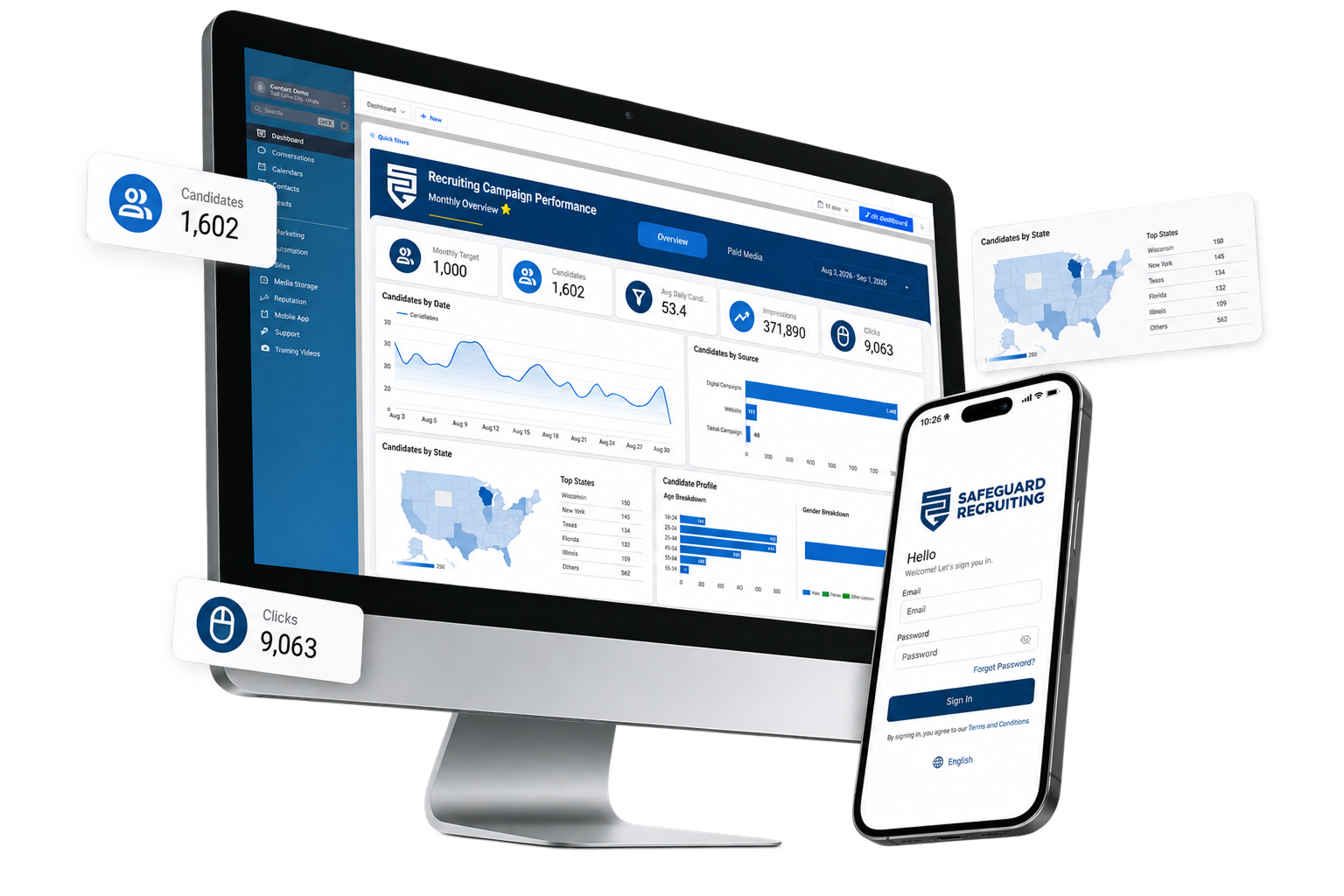
Police recruiting software and public safety recruiting solutions give agencies the ability to track applicants, automate communications, schedule testing events, and measure which recruiting channels are actually producing qualified candidates. Without that data, you are guessing.
An applicant tracking system built for law enforcement is not just an administrative convenience. It is a strategic asset. It reduces candidate drop off, speeds up the process, and gives your recruiting team the visibility they need to make better decisions.
Recruiting tools for police departments that integrate with digital marketing platforms also allow agencies to connect their advertising spend directly to application outcomes, so leadership can see what is working and where resources are being wasted.
Your Agency Does Not Have to Figure This Out Alone
Recruiting millennials in law enforcement requires a different strategy, better tools, and a clear understanding of what this generation is looking for in a career. The agencies filling their ranks are not waiting for the applicant pool to come back on its own. They are actively investing in their recruiting infrastructure.
Safeguard Recruiting works with law enforcement agencies across the country to build modern, data driven recruiting programs that attract millennial talent, reduce time to hire, and improve first year retention. If your agency is ready to stop running the same playbook and start seeing different results, visit safeguardrecruiting.com to learn how we can help.
References
Faber, M., & Wilson, J. (2023). Workforce trends in American policing: Recruitment, retention, and the staffing crisis.Police Executive Research Forum. https://www.policeforum.org
Fry, R., & Parker, K. (2022). The rise of the millennial workforce: Demographic shifts and employment trends. Pew Research Center. https://www.pewresearch.org
International Association of Chiefs of Police. (2023). Law enforcement recruitment and retention: A national survey.IACP. https://www.theiacp.org
Koper, C. S., Lum, C., & Willis, J. J. (2021). Recruit and retain: Technology adoption in law enforcement hiring. George Mason University, Center for Evidence-Based Crime Policy. https://cebcp.org
Rabe-Hemp, C., & Shuck, M. G. (2021). Generational differences in policing: Millennial officers and organizational commitment. Police Quarterly, 24(2), 183-209. https://doi.org/10.1177/1098611120943950
U.S. Bureau of Labor Statistics. (2024). Occupational outlook handbook: Police and detectives. U.S. Department of Labor. https://www.bls.gov/ooh/protective-service/police-and-detectives.htm
Wilson, J. M., & Weiss, A. (2022). A performance-based approach to police staffing and allocation. U.S. Department of Justice, Office of Community Oriented Policing Services. https://cops.usdoj.gov