

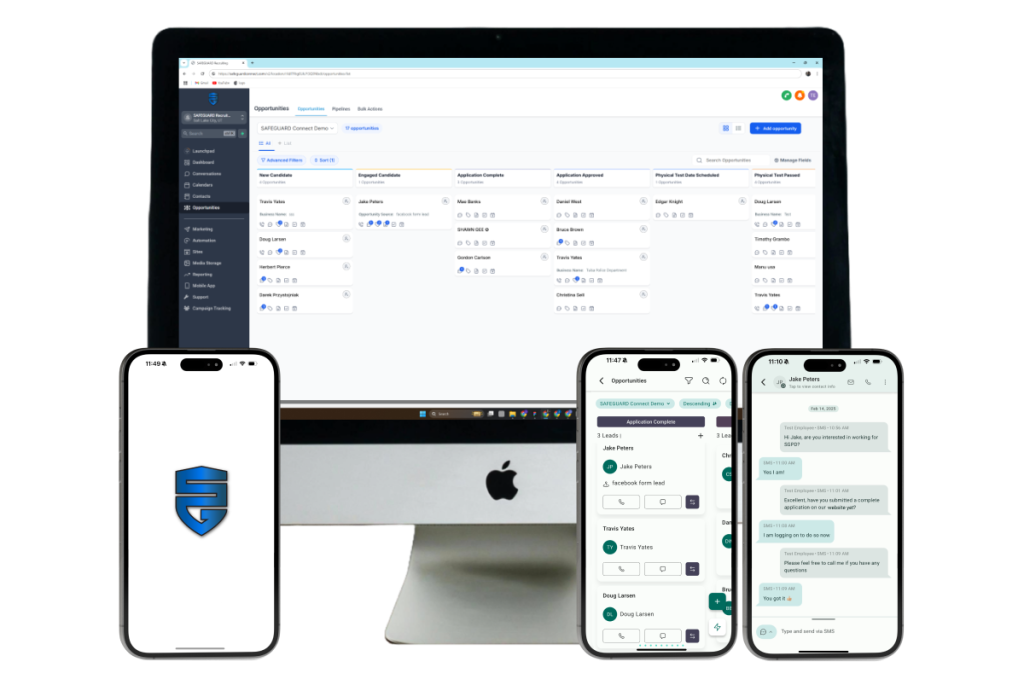
Police recruiting software is no longer a luxury for large metropolitan departments. It’s the operational backbone of any agency serious about solving today’s hiring crisis.
Departments across the country are carrying vacancy rates of 15 to 25 percent. The International Association of Chiefs of Police reported that more than 78 percent of agencies surveyed said they were understaffed. And the pipeline isn’t refilling itself. If your recruiting process still runs on spreadsheets, paper applications, and email chains, you’re not just behind — you’re actively losing candidates to agencies that make it easier to apply.
The Real Cost of a Manual Recruiting Process
Before diving into software features, it’s worth naming what a broken process actually costs your agency.
Every week, a position sits open, and your existing officers absorb that workload. Mandatory overtime climbs. Morale drops. Officers who are already on the fence about staying start looking at lateral opportunities. One open position doesn’t stay one open position for long.
Beyond staffing strain, manual processes introduce inconsistency into your background investigation pipeline, your communication with applicants, and your compliance documentation. When a candidate goes dark after step two of a six-step process, and nobody catches it for three weeks, that’s a software problem masquerading as a people problem.
What Police Recruiting Software Actually Does
Good recruiting software built specifically for law enforcement does several things that generic HR tools don’t.
It centralizes your entire applicant pipeline. Every candidate — whether they came from a job board, a career fair, a social media ad, or a referral — flows into one system. Recruiters see where every applicant is in the process in real time, and nothing falls through the cracks.
It automates communication without losing the human touch. Automated status updates, interview reminders, and document requests keep candidates engaged through what can be a 6 to 12-month hiring process. The agencies whose candidates lose out between physical agility and background investigation are almost always the ones going silent for weeks at a time.
It tracks compliance and documentation. Law enforcement hiring is heavily regulated. The right platform stores consent forms, polygraph waivers, medical release documents, and background investigation records in a single auditable location — which matters when POST audits or legal challenges arise.
It gives you recruiting data you can actually use. How many applicants did your last academy class generate? What was your drop-off rate between the written exam and the oral board? Which sourcing channel produced your highest-quality hires? Without software, these questions take hours to answer. With the right platform, they take seconds.
Features to Prioritize When Evaluating Platforms
Not all applicant tracking systems are built for law enforcement. A system designed for corporate HR will miss the mark in ways that matter. Here’s what to look for specifically in police recruiting software.
A multi-step process builder
Your hiring process isn’t linear. Candidates move through physical testing, psychological evaluation, polygraph testing, background investigation, and conditional offers in an order that varies by candidate. Your software needs to handle branching workflows, not just a straight funnel.
Mobile-friendly application experience
Generation Z applicants, your primary recruiting target for entry-level positions, will abandon an application that isn’t optimized for mobile. If your portal requires a desktop browser and a PDF download to apply, you’re filtering out a generation before they even read the job description.
Reporting and analytics dashboard
Look for police recruiting software platforms that surface drop-off rates by stage, time-to-hire by position type, and source attribution by hire. These metrics tell you where to invest recruiting dollars and where your process is losing people.
Background investigation workflow support
This is the feature most generic ATS platforms skip entirely. Police recruiting software should support investigator assignment, document collection, and status tracking within the background phase — not just flag it as “in progress” for weeks on end.
A Note on Lateral Recruiting
If your agency is running a lateral hiring program, software becomes even more critical. Lateral candidates — certified officers coming from other departments — move faster, expect faster responses, and have options. They’re not waiting three months to hear back from your background investigator.
Platforms that support parallel processing, expedited tracks, and dedicated lateral pipelines give your agency a real competitive edge in a market where experienced officers are being recruited aggressively from all directions.
The Agencies Winning the Recruiting Battle Are Using Better Tools
Agencies that have implemented purpose-built police recruiting software consistently report shorter time-to-hire, higher applicant-to-hire conversion rates, and better candidate experience scores. The technology doesn’t replace your recruiters — it removes the administrative burden that keeps them from doing the relationship-building work that actually moves candidates through the door.
The agencies still losing ground are the ones waiting for the hiring market to improve on its own. It won’t. The departments growing their ranks are investing in systems that make their process faster, more consistent, and easier for candidates to navigate.
Ready to Modernize Your Agency’s Recruiting Process?
Safeguard Recruiting works with law enforcement agencies to streamline every stage of the hiring pipeline — from first application to hire. If your team is ready to move beyond spreadsheets and build a recruiting operation that actually scales with police recruiting software, schedule a conversation with the Safeguard Recruiting team today.