

Every agency wants more applicants. Most agencies are still using the same playbook: post the job, share it on Facebook once, show up at a career fair, and wait. That approach isn’t a strategy, it’s a wish. In today’s environment, the agencies winning the talent war treat hiring like a modern outreach operation with a defined funnel, tight messaging, and fast follow-up. That’s what police recruitment marketing actually is: a system designed to generate qualified interest consistently, not occasionally.
Police Recruitment Marketing
Start with the truth: you’re not competing with “other departments”
You’re competing with every employer offering stability, flexibility, and a clear path forward. Candidates are making decisions at the speed of their phone, and they’re judging you long before a recruiter ever speaks to them. If your message is unclear, your process is slow, or your website feels like it was built in 2009, you’re bleeding applicants you never even knew you had.
Effective police recruitment marketing begins by accepting one hard reality: the candidate experience is the product. If it’s confusing, delayed, or inconvenient, the best prospects leave.
The 5 pillars of a recruiting funnel that produce applicants
1) Positioning: why your agency exists and why it matters
Most recruiting messaging is generic. “Great benefits, competitive pay, serve your community.” That describes nearly everyone. What makes you different?
Your positioning should answer:
What kind of officer thrives here
What this agency values and refuses to compromise
What career growth looks like in year one, three, and five
What your culture protects (training, leadership, accountability, teamwork)
This is where police recruitment marketing separates serious agencies from those just filling space on a banner. Specific beats vague every time.
2) A dedicated recruiting website built for conversion
Your city website is not a recruiting website. Candidates don’t want to dig through a municipal menu to find the pay scale, requirements, and next steps. Your recruiting site should be mobile-first, fast, and designed around a single objective: driving a visitor to take an action.
Must-have elements:
Clear requirements and disqualifiers up front
Pay, incentives, and schedule transparency
A simple “Request Info” and “Apply Now” flow
Testimonials that show the real culture
A timeline that sets expectations (and reduces drop-off)
A high-performing site is the backbone of police recruitment marketing, because every ad, post, and QR code eventually leads back to it.
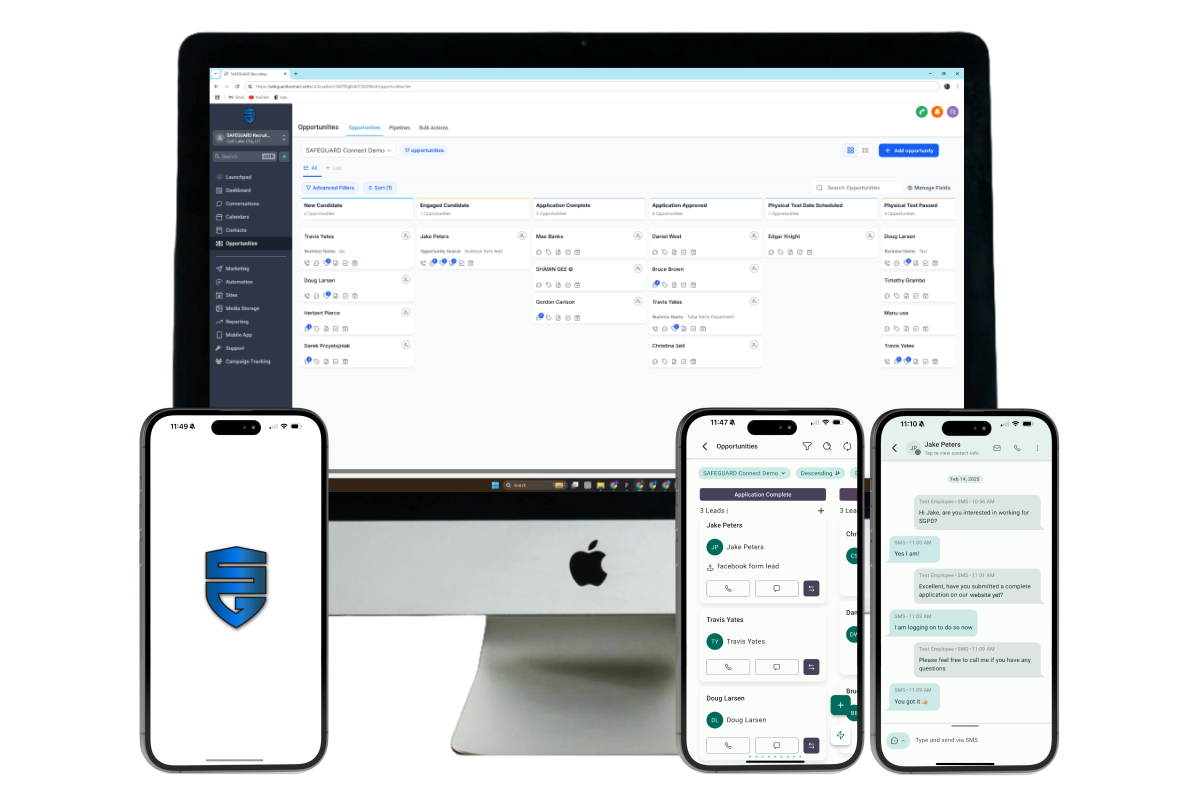
3) Speed to lead: the first contact wins
Most agencies respond to inquiries when they “get a chance.” Candidates interpret that as disinterest, disorganization, or both. Your competition is responding in minutes, not days.
If someone requests info, your system should:
Send an immediate confirmation text/email
Route the lead to a recruiter instantly
Trigger structured follow-up for the next 7 to 14 days
Make scheduling a call stupid-easy
This isn’t about being pushy. It’s about being present. Police recruitment marketing works when the handoff between interest and conversation is frictionless.
4) Content that answers real objections
Candidates have concerns they may never say out loud: leadership trust, morale, media scrutiny, safety, and whether the job is worth it. If your content ignores those concerns, you lose the serious candidates and attract the wrong ones.
Content that converts:
Day-in-the-life videos that show reality, not fantasy
Short Q&As on background standards and the process
Explainers on training, field training, and support resources
Family-focused content for spouses and parents
Recruiter-led videos that build trust
Great police recruitment marketing doesn’t just “promote.” It pre-answers hesitation and reduces fear.
5) Targeting and retargeting: stop wasting reach
Recruiting is not about “going viral.” It’s about reaching the right people repeatedly until they act. That means you need targeting (who sees the message) and retargeting (who sees it again after visiting your site).
Smart campaigns focus on:
Geographic radius around your hiring pool
Age and interest indicators tied to public service
Lateral audiences who already follow LE pages
Retargeting website visitors and video viewers
This is where police recruitment marketing becomes measurable. You can track cost per lead, lead-to-applicant conversion, and the time it takes to generate a qualified pipeline.
The metric that matters most: lead to applicant conversion
Clicks don’t hire officers. Applications do. Your goal is not traffic, it’s conversion.
Track:
How many leads come in per week
How many are contacted within 10 minutes
How many schedule a call
How many start an application
How many finish
When agencies adopt this mindset, police recruitment marketing stops being “branding” and becomes a repeatable staffing engine.
Conclusion: systems beat slogans
If your recruiting outcomes depend on one motivated recruiter, one good event, or one lucky month, you don’t have a pipeline. You have a fragile process. The agencies that win build systems that deliver consistent contact, messaging, and conversion. That is the difference between departments that stay short-staffed and those that stabilize and grow. Done right, police recruitment marketing isn’t a campaign or a month in the year. It’s the infrastructure that keeps your agency competitive year-round.
A great example of police recruitment marketing is the Milwaukee Police Department. Their website and associated videos were completed by SAFEGUARD Recruiting. What do you notice about the site?
Reach out to SAFEGUARD Recruiting for a free consultation and find out how police recruitment marketing is done right… every time.