

If your agency is still relying on the same police recruitment strategies it used a decade ago, you already know they’re not working. Job fair tables, newspaper listings, and a careers page buried four clicks deep on your website aren’t going to compete in today’s market.
The departments making real progress on their vacancy numbers aren’t doing more of the same; they’re rethinking how, where, and to whom they’re recruiting. Here’s what’s actually moving the needle.
Start With an Honest Audit of Your Current Process
Before you can improve your police recruitment strategies, you need to know where candidates are dropping off.
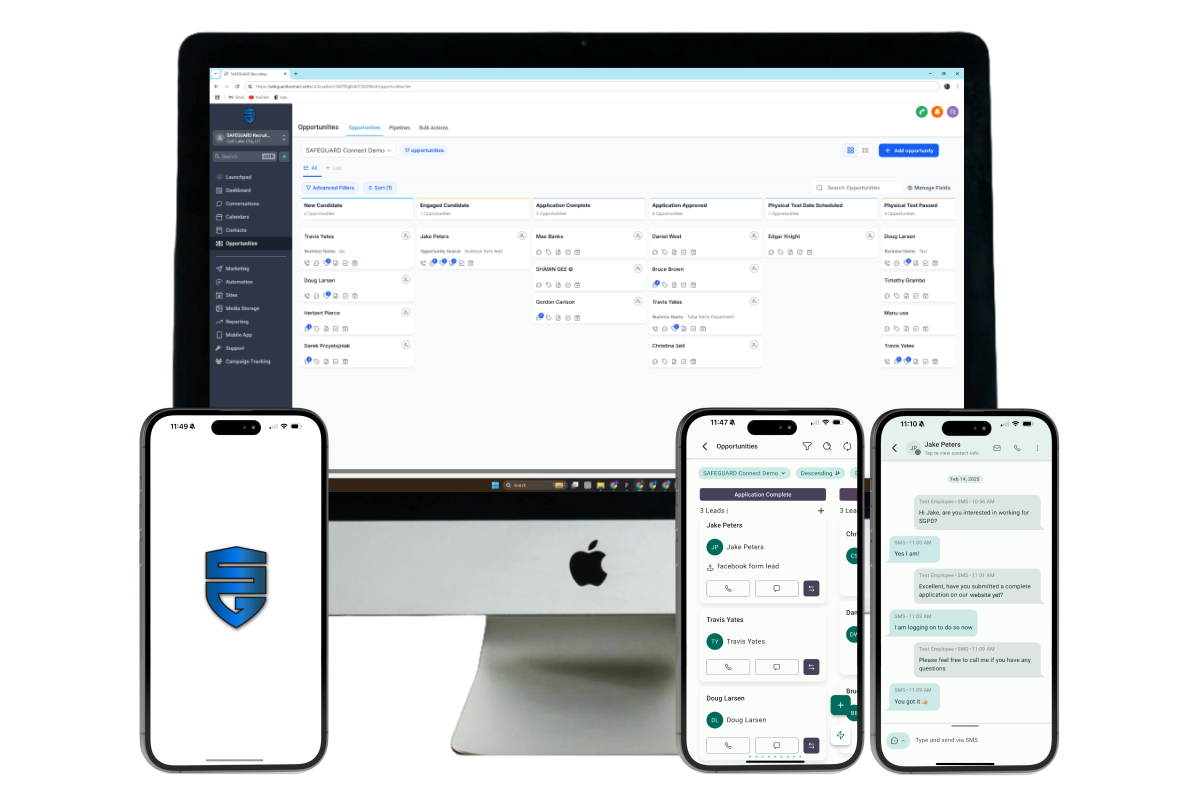
Most agencies losing applicants don’t lose them at the top of the funnel; they lose them in the middle. A candidate applies, passes the written exam, and then waits three weeks to hear about the next step. By the time your recruiter follows up, that person has accepted a conditional offer somewhere else.
Map your entire hiring process from first application to academy start date. Identify every stage where candidates go more than five business days without a touchpoint. Those gaps are your first fix, and they don’t require a budget increase to address.
Build a Proactive Sourcing Pipeline
Reactive recruiting, waiting for applications to come in, is a losing strategy in a market where qualified candidates have options. Effective police recruitment strategies in 2025 are built on proactive outreach.
That means your recruiters are working the pipeline before positions are open, not after. It means maintaining relationships with criminal justice programs at community colleges and universities. It means showing up at military transition events, veterans’ job fairs, and community events with a genuine presence, not just a banner and a business card stack.
The agencies consistently filling their academies are the ones that treat recruiting as a year-round operation, not a reactive scramble when the chief flags a vacancy in the report.
Make Your Digital Presence Do Real Work
Your online footprint is your first impression with the majority of candidates under 35. If it’s weak, you’re losing applicants before they ever engage with a recruiter.
A strong digital recruiting presence comprises several components that work together. Your careers page should load fast, display clearly on mobile, and make it obvious within ten seconds what it’s like to work for your agency. Your social media channels should feature real officers telling real stories, not stock photos and generic slogans.
Paid digital advertising is also worth the investment. Targeted ads that reach people in your geographic area who match your candidate profile consistently outperform traditional job board postings for cost-per-applicant. Departments running even modest paid social campaigns report meaningful increases in application volume from younger demographics.
Develop a Serious Employee Referral Program
Your current officers are your most credible recruiters. They know the job, they know your culture, and they have networks of people who might be a great fit. The problem is that most agencies don’t give them a structured reason to refer.
A formal employee referral program, with meaningful incentives tied to a hire reaching academy graduation, not just application submission, activates your entire workforce as a recruiting asset. Some agencies offer cash bonuses ranging from $500 to $2,000 per successful referral hire. Others provide extra time off, recognition, or both.
The key is making the program visible and easy to participate in. Officers shouldn’t have to ask how to submit a referral. The process should be simple, the status should be trackable, and the reward should be worth talking about.
Rethink Your Minimum Qualifications
This one generates pushback, but it deserves a direct conversation. Many agencies are disqualifying candidates on criteria that no longer reflect the realities of who makes a good officer.
Age windows, prior marijuana use thresholds, credit history thresholds, and tattoo policies were written for a different era and a different applicant pool. Departments that have revisited these standards, carefully and with legal guidance, have unlocked significant new candidate pipelines without compromising the quality of their hires.
This doesn’t mean lowering standards that matter. Physical fitness, background integrity, psychological suitability, and ethical conduct are non-negotiable. But if your disqualifiers are rooted in policy tradition rather than evidence-based hiring criteria, they’re costing you candidates that could be developing into excellent officers.
Invest in Your Lateral Recruiting Program
Lateral candidates, certified officers from other agencies, represent one of the fastest paths to filling vacancies with experienced personnel. They arrive already trained, POST-certified, and ready to contribute with minimal ramp-up time.
But lateral recruiting requires a different approach than entry-level hiring. Experienced officers aren’t browsing job boards. They’re being recruited directly, often by multiple agencies at once. Your pitch to a lateral candidate needs to be specific: what does your agency offer that theirs doesn’t? Better pay? Advancement opportunity? A different community environment? Specialty unit assignments?
Departments that win lateral hires treat it like a sales process — they identify prospects, build relationships, make compelling offers, and move quickly. Agencies that post a lateral opening and wait rarely fill it.
Measure What Matters
No recruitment strategy improves without measurement. At a minimum, your agency should be tracking application volume by source, drop-off rate by hiring stage, time-to-hire from application to conditional offer, and lateral hire conversion rate.
These numbers tell you what’s working and what’s wasting budget. A sourcing channel that generates 200 applications but produces zero hires isn’t an asset; it’s noise. A referral program that produces 10 applications and 7 hires is worth doubling down on.
The agencies with the most sophisticated police recruitment strategies aren’t necessarily the ones with the biggest budgets. They’re the ones who know their numbers and make decisions based on data rather than habit.
The Bottom Line
Filling your roster in today’s environment requires more than good intentions. It requires a structured, proactive, data-informed approach to every stage of the recruiting funnel, from first impression to academy graduation.
The good news is that most of these police recruitment strategies are within reach for agencies of any size. Those who commit to changing how they recruit consistently see results. The ones that keep doing what they’ve always done keep getting what they’ve always gotten.
Let Safeguard Recruiting Help You Build a Better Pipeline
Safeguard Recruiting specializes in helping law enforcement agencies develop and execute police recruitment strategies that produce results. Whether you need to overhaul your entire hiring process or strengthen one specific stage, our team brings real-world recruiting expertise to the table. Connect with Safeguard Recruiting today and start building the roster your community deserves.