

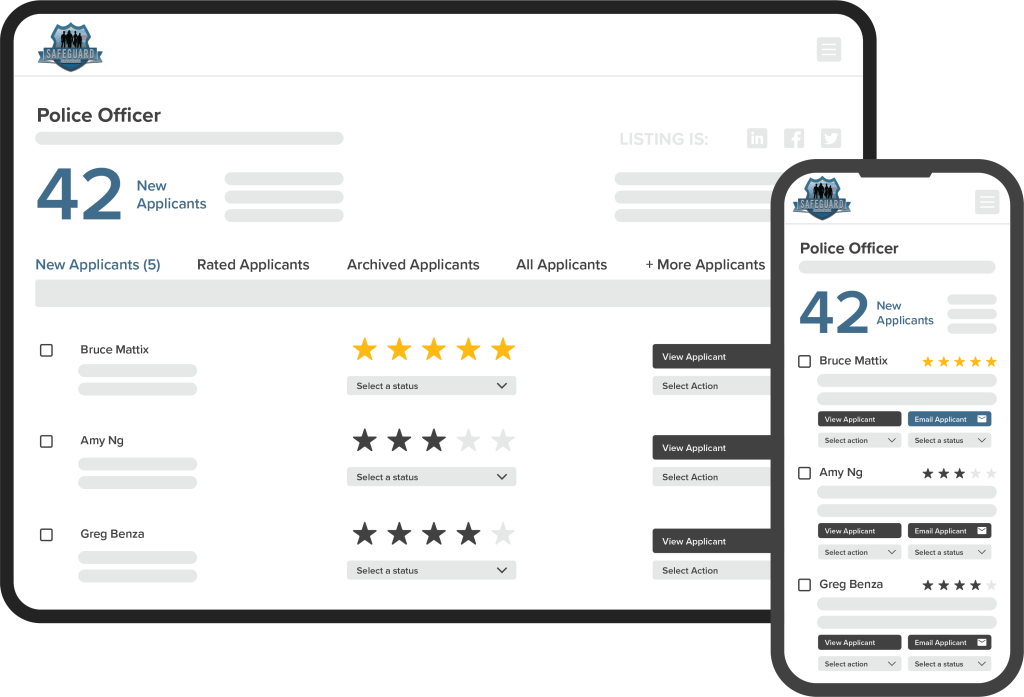
Police applicant tracking isn’t a buzzword, it’s the operational backbone your recruiting unit probably doesn’t have yet. If your agency is still managing candidates through spreadsheets, shared inboxes, or sticky notes on a whiteboard, you’re not just working harder than you need to. You’re losing qualified candidates to agencies that have figured out how to move faster.
The competition for sworn officers has never been tighter. Agencies across the country are fishing from the same shrinking pool of candidates, and the departments that win aren’t always the ones with the best pay or the nicest equipment. They’re the ones that communicate better, follow up faster, and keep candidates engaged through a process that typically takes six to twelve months to complete.
That’s exactly what a purpose-built police applicant tracking system is designed to do.
What Is Police Applicant Tracking — and Why Does It Matter Now?
An applicant tracking system (ATS) is software that manages every candidate from initial application through hire. In the private sector, ATS platforms have been standard for decades. In law enforcement, adoption has lagged — and that gap is costing agencies qualified recruits every single day.
A police applicant tracking system does more than store resumes. It automates follow-up communications, tracks where each applicant stands in the background process, flags candidates who’ve gone quiet, and gives your recruiting team a real-time view of the entire pipeline.
According to the Police Executive Research Forum, agencies that fail to maintain consistent contact with applicants during the hiring process lose a significant portion of their candidate pool before ever reaching a conditional offer. Candidates don’t just wait — they accept other offers, including offers from competing departments.
A structured applicant tracking system closes that gap.
The Real Cost of a Manual Hiring Process
Most recruiting sergeants didn’t sign up to manage spreadsheets. But without a centralized system, that’s exactly what happens. One recruiter is tracking email threads. Another is chasing down background investigators for status updates. A third is manually sending reminder emails to candidates who haven’t completed their polygraph paperwork.
This isn’t just inefficient, it’s a candidate experience problem.
When an applicant submits an application and hears nothing for three weeks, they assume the worst. They move on. Your agency spent money generating that lead through job fairs, social media, and digital advertising, and it evaporated because no one had a reliable system to follow up.
Multiply that across a hiring class of 40 candidates and the math gets painful fast.
A dedicated police applicant tracking platform eliminates the manual back-and-forth. Automated status updates keep candidates informed without requiring a recruiter to send individual emails. Document checklists ensure applicants know exactly what’s needed and when. Pipeline dashboards give recruiting supervisors an accurate count of who’s active, who’s stalled, and who’s at risk of dropping off.
What to Look for in Police Recruiting Software
Not all applicant tracking systems are built for law enforcement. Generic HR software often lacks the specific workflow features that a multi-stage law enforcement hiring process requires , and trying to force a corporate ATS into a public safety context usually creates more problems than it solves.
Here’s what to look for when evaluating police recruiting software:
Stage-by-Stage Pipeline Visibility
Law enforcement hiring involves a lot of sequential steps: written exam, physical fitness test, oral board, background investigation, polygraph, psychological evaluation, medical clearance, and final offer. Your ATS should mirror that workflow exactly, with clear status indicators at each stage.
Automated Candidate Communication
Look for a platform that allows you to build out automated email and text sequences triggered by stage changes. When a candidate passes their oral board, the system should immediately notify them of next steps — not when your recruiter gets around to it.
Reporting and Analytics
Your command staff wants to know your cost per hire, your time to fill, and your attrition rate by hiring stage. If your current system can’t generate those numbers in under five minutes, you’re flying blind. Strong recruiting software should make data reporting effortless.
How Applicant Tracking Supports Lateral Recruiting
Lateral recruiting, bringing in experienced officers from other agencies, has become a critical strategy for departments dealing with staffing shortfalls. But lateral candidates move fast. They’re already employed, often fielding multiple offers, and they have no patience for slow or disorganized hiring processes.
An applicant tracking system gives your lateral pipeline the same structure as your entry-level pipeline, but with the speed adjustments laterals require. Abbreviated workflows, faster background timelines, and proactive communication can mean the difference between landing an experienced officer and watching them accept a position two counties over.
Making the Case to Leadership
Budget conversations around recruiting technology can be difficult in the public sector. But the return on investment is straightforward. If your agency spends $15,000 per hire in recruiting costs, job fair attendance, advertising, staff time, testing fees, and a better applicant tracking system helps you retain even five additional candidates per hiring cycle who would have otherwise dropped off, the system pays for itself quickly.
The better argument, though, is mission readiness. Every vacant position represents a gap in coverage, increased overtime costs, and added strain on the officers who are still on the job. Keeping your hiring pipeline moving isn’t a nice-to-have — it’s an operational priority.
The Bottom Line
Police applicant tracking isn’t complicated, but it does require the right tools. Agencies that invest in purpose-built recruiting software move faster, communicate better, and lose fewer candidates to a slow or disorganized process. In a market where every qualified applicant is being recruited by multiple departments, that operational edge matters.
Ready to see what a purpose-built police applicant tracking system looks like in practice? Safeguard Recruiting was built specifically for law enforcement agencies navigating today’s recruiting challenges. Visit safeguardrecruiting.com to learn how agencies like yours are filling more positions through their public safety, purpose built applicant tracking software, Safeguard Connect.